From “Ethos” to “Place”

I am walking boldly from “ethos” alone to “ethos and place”.

Originally posted January 2022

I am making a career move.

https://www.grinnell.edu/news/grinnell-college-appoints-vice-president-academic-affairs-and-dean-college

Since my undergraduate training in a liberal arts environment at Washington University in St. Louis, I’ve engaged knowledge and insights from many disciplinary perspectives while centering myself in the sciences.

I recall classes in literature, women’s studies, and African and African-American Studies (A&AAS)—the latter quite frankly to both learn about the experiences of Black Americans and Africans in the diaspora as much as to have the experience of a class taught by a Black professor. While studying biology, psychology, and math, these classes in literature, A&AAS, and women’s studies, among others impacted my intellectual pursuit of and engagement in my core disciplines.

I recall many conversations with my science professors about the cultural origins and global implications of scientific knowledge—such inquiries were often met with confusion, encouragement to “stay focused” on science, or on the rare occasion curiosity or encouragement.

Yet, I persisted.

Knowledge for me was never an individual pursuit alone, but a cultivation of my own curiosity which increased my individual knowledge and—because knowledge is communal in my family and culture of origin—a contribution to the collective knowledge of communities of which I was a part.

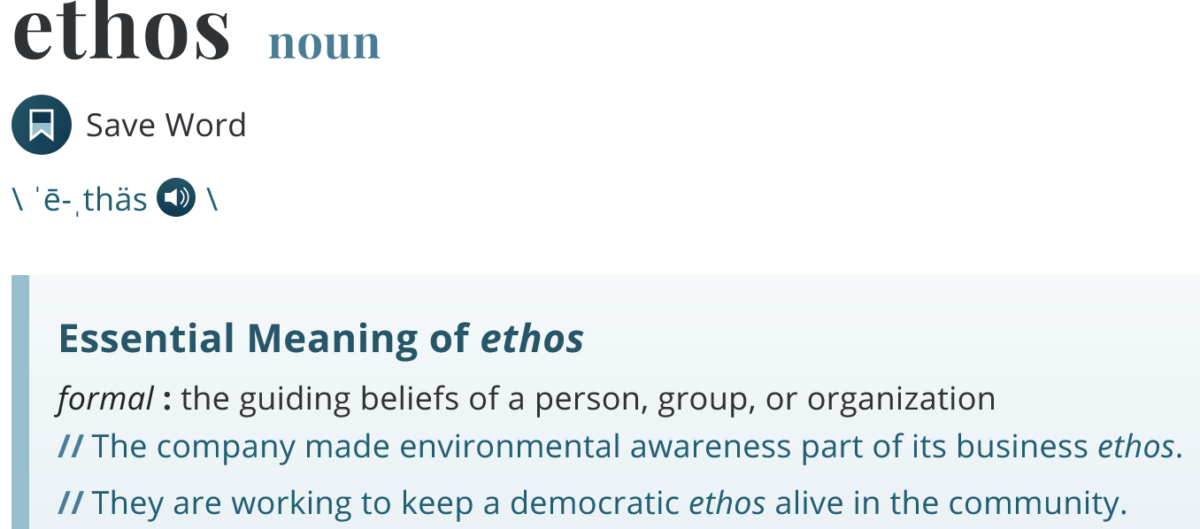
While my doctoral, postdoctoral, and (to-date) faculty positions have been in research-intensive institutions, I’ve always had a liberal arts “ethos” guiding my professional existence.

https://www.merriam-webster.com/dictionary/ethos

As a graduate student at UC Davis, I was actively involved in interdisciplinary communities, including the Ford Fellows Community, that allowed me to stay actively engaged in disciplines far beyond my own foci of biology and biochemistry. I read (and continue to do so) broadly—books and other scholarly works authored by my Ford Fellow colleagues and others in sociology, Black feminist theory, history, and more.

This interest outside my own scientific focus continued into my postdoctoral tenure at Indiana University and was formalized in my active involvement in communities focused on service learning and other community-engaged practices of taking knowledge outside academic spaces to impact local and community priorities. Such approaches that encourage pragmatic consideration of the impact of knowledge furthered my liberal arts and social engagement ethos.

The further cultivation and commitment to hold dear to such an ethos continued into my faculty career, despite expressed concerns that my commitment to “causes”—including work centered in equity and justice in the sciences, higher education, and far beyond—could be a distraction from my pursuit of scholarly “fame” and traditional forms of recognition.

Functioning based on a liberal arts ethos led me to consider (privately and publicly) not just what I was learning about plants and microbes in the experimental studies conducted by my research group to understand how these organisms perceive and respond to external environmental cues such as light and nutrient availability, but also to ask what can we learn from plants (#LessonsFromPlants) and microbes (#LessonsFromMicrobes) about how to be better humans—individually and in community.

Looking to plants and microbes as teachers is not an uncommon practice globally, although it can certainly be thought of as “outside of the box” in the sciences. Yet, these limitations do not guide one such as me who possesses a liberal arts ethos even when functioning in a research environment.

So, when invited to consider an opportunity to move from “ethos” to “place”—especially a place with expressed commitment to social responsibility and justice—I felt compelled to consider it.

Having engaged with a community dedicated to living out their expressed values and commitments, I knew this invitation was one I was eager to pursue.

Now I’m excitedly embarking on a new phase of my professional journey.

I am walking boldly from “ethos” alone to “ethos and place” as I prepare to join the Grinnell College community.

I look forward to sharing the journey ahead, including continuing to ask (as well as write about) how we collaboratively implement new means of leading and mentoring equitably, and what plants and other biological organisms and ecosystems have to teach us about that.

As always, if you have thoughts on this or other posts, find me on Twitter at @BerondaM

The pursuit of a ‘better’ inequality?

I can no longer commit to “better inequality” as a goal or victory. I long for the collective commitment to move from espoused to lived.

My body is on vacation though my mind decidedly is not.

Annually I seek out a new place, or revisit on “old favorite”, for my end-of-year vacation. New locations distract my mind with explorations of places, foods, and often people unknown—or at the very least not commonly familiar—to me.

I’ve been a long-time adventurer according to my mother who describes how nearly from the time I could talk I’d ask to tag-along on an adventure with friends or family who stopped by to visit en route elsewhere.

The challenges of the global pandemic of 2020 left me making a decision to have a “stay-cation” this year in hopes of doing my small part in curbing the spread of coronavirus. That said, getting the mental break that often comes with new adventures in new places, or revisited adventures in favorite places, wasn’t an option for me this year. So, I “sit” in vacation mode at home.

This has left me much time to read, as well as to think—and many of my thoughts have centered on my concerns about so much that has happened in 2020. While I have continued concerns about the spread of coronavirus and the disease COVID-19 that it causes, as well as the continued grave loss of so many lives that we’ve not fully reckoned with or grieved collectively, I’ve also continued to reflect deeply on 2020 as the purported year of “racial reckoning”.

I guess I err on the side of caution—the caution of having lived multiple decades as a Black woman in America and the generations of caution imbued in me from the experiences of my Black ancestors—and think of 2020 more in line with Wikipedia as the year of “racial unrest”.

I certainly felt even more strongly than ever that we have heightened attention to racial unrest, rather than a deep-rooted racial reckoning, given the upwards of 75M who voted for a leader who is decidedly racist. This reality indeed stopped me literally for some days post-election.

If this country is indeed ever to have a true racial reckoning we will need more truth-tellers like writer and critic Kiese Laymon who declares the following in his recent, re-released essay collection How to Slowly Kill Yourself and Others in America:

“Anti-Blackness [is]…an addiction broken only by honest reckoning, consistent practice, and welcoming of radical spirits.”

Kiese Laymon, How to Slowly Kill Yourself and Others in America, p. 12

Being in a state of “racial reckoning” in America was declared after the national attention on anti-Blackness and anti-racism in the summer of 2020 following the latest killings of Black Americans at the hands of police, including George Floyd and Breonna Taylor, among so many others.

Many picked up books and shared public reflections on the change that needed to come. Many declared that the focus on this topic was happening in a way that they had not seen before. These declarants included wise public elders such as Angela Davis and my personal ones including my mother, who grew up in the segregated South. My mother, who but for being pulled from school many days to “pick cotton” might have been the first professor in our family, rather than me a generation later.

I believed them in the moment when they stated that this time was different–I still endeavor to believe them. But 75+ million….

Also, if I am completely transparent with you…and after having written and published some of the pieces I’ve written this year including declaring that “I am not Your Savioress” (in the anthology edited by Nicole Joseph titled Understanding the Intersections of Race, Gender, and Gifted Education), why stop now?!

Truth is I don’t [hopefully not yet, rather than not never] have the trust I should in my colleagues and community members that they will commit to the long-term, difficult, and uncomfortable collective work that will be required to move from an understanding of 2020 as the year of “racial unrest” to 2020 as the START of true “racial reckoning”. I genuinely don’t trust—just yet—that the current structure of academia will follow through on all of the Black solidarity or anti-Black racism statements. I don’t trust the current structure of academia to do much consistently other than pursue the scarcity of hierarchy, the continued delusion of meritocracy, and ongoing rat race of quantitative metrics, as well as to persist in fear of the “radical” and indeed to disavow, rather than welcoming, “radical spirits”.

Kiese has told us that the path requires reckoning and the radical. We have an “espoused reckoning” that must mature, indeed must aspire, to be a “lived” one.

All I have control over is me. So, as I try to vacation, rest and restore, I commit to move ahead into 2021 continuing to cultivate and guard my radical spirit, my truth-telling soul so that I can stand ready to be a part of breaking our collective addiction to inequality.

But as 2020 ends, I must admit that I fear that our incomplete commitment—indeed our inability and perhaps abject failure—to understand that our espoused “reckoning” is truly just recognition of “unrest” rather than a reckoning in the sense of acknowledging and settling.

Recognition is simply awareness. And in terms of awareness of racial unrest, I think of what Imani Perry says about awareness in her book Breathe. She states:

“Awareness is not a virtue in and of itself, not without a moral imperative.”

Imani Perry, Breathe, pp. 18-19

Our [false] need to believe that we are reckoning with the “thing” rather than [re-]recognizing or simply having heightened awareness of it will only lead us to “better inequality” rather than the raw and real pursuit of equity as a “moral imperative” that we truly need.

I can no longer commit to “better inequality” as a goal or victory. I long for the collective commitment to move from espoused commitment to pursue equity to lived and essential commitment to do so.

In 2021, you’ll continue to find me in all of my radical and truth-telling fullness on Twitter—@BerondaM.

The Power and Peril of Being Deemed “Essential”

In the wake of COVID-19, the disease caused by the novel coronavirus SARS-CoV-2 (i.e., severe acute respiratory syndrome coronavirus 2), we’ve learned new meanings associated with being deemed “essential.”

From the very start of the global pandemic, “essential workers” necessarily included first responders such as healthcare workers needed to diagnosis and treat COVID-19 patients. Additionally, however, other workers were deemed “essential” and expected to continue to work, despite the fact that doing so exposed them to risks. These personnel included those working at grocery stores, farm workers, delivery workers, transit personnel, as well as custodial workers in hospitals, shops, and other essential businesses.

Though deemed essential, these workers were often underpaid, even as they assumed heightened coronavirus exposure risks. Their temporal “essentiality” undoubtedly put them peril at of a greater risk of contracting COVID-19. Again, many of these workers are generally among the lowest paid; yet, “stay at home” orders made the work that they carry out critical in ways that we’d overlooked or actively failed to acknowledge (and reward) before the onset of pandemic. Indeed, despite years of lobbying and activism, minimum wage in the U.S. has been stagnant for decades.

At the same time that society-at-large was dealing with the pandemic, schools, colleges and universities were also pivoting to new means of engagement and education. Increasingly tuition-driven, colleges, and universities immediately began strategizing about how to keep classes going, and tuition money flowing.

Essential to the work of colleges and universities at this moment, personnel versed in “virtual” or on-line learning, and central to digital platforms, contributed to rapid pivots of instruction on-line. Many of the changes and innovations—and certainly not the speed at which they occurred—likely would not have been deemed possible prior to COVID-19—certainly not without protracted debate and planning. Yet, the recognition that failure to maintain access to classes would halt tuition income led to rapid action, and relaxed barriers about who could and should lead change in these spaces.

As access to class was deemed “essential” for the survival of institutions, rapid pivots and digital innovations ensued. Thus, while peril and risk came to those deemed “essential workers” in society-at-large due to exposure risks and job insecurity, “essential service” in colleges and universities that was tied to financial survival could be seen as leading to promise in regards to opportunities for digital innovations and stimulating the pace of change.

In the midst of responses to coronavirus pandemic, racial unrest resurged in the U.S. [although for many Black Americans it was already a present & persistent daily reality] due to events including those with Black birder Christian Cooper and involving the murder of George Floyd at the hands of police.

Universities responded, as did a great number of business entities, with statements professing solidarity with Black Americans and public written and verbal declarations that “Black Lives Matter.” Yet, despite these statements, real actions and strategies to mitigate or eliminate anti-Black racism have been much slower to emerge and less definitive in nature, despite the long-known racial disparities in academia.

These changes promised in the wake of responding to anti-Black racism have limped along or failed to materialize altogether—as if they are not essential!

Because I’ve seen what can happen when an issue or challenge is seen as essential, indeed is seen as critical to the very survival of academic institutions due to the tragic reality of COVID-19, I wonder what would happen if ensuring justice and equity in terms of access and success were truly seen in a similar light.

What rapidity and lengths of change would we see, if the leaders of our institutions saw equity and justice for students, staff, faculty—indeed all in these spaces—as essential to their very existence and ongoing survival.

No matter how many statements are made to communicate that equity is essential in these spaces, true promise in transforming institutions into spaces that prioritize, actively pursue, and hold themselves accountable for pursuing and maintaining equity and justice will only come when we deem it ESSENTIAL!

If you have comments on this post, as always find me on Twitter—@BerondaM.